22.05.2021 - 31.07.2021
Spazio aperto
22.05.2021 - 31.07.2021
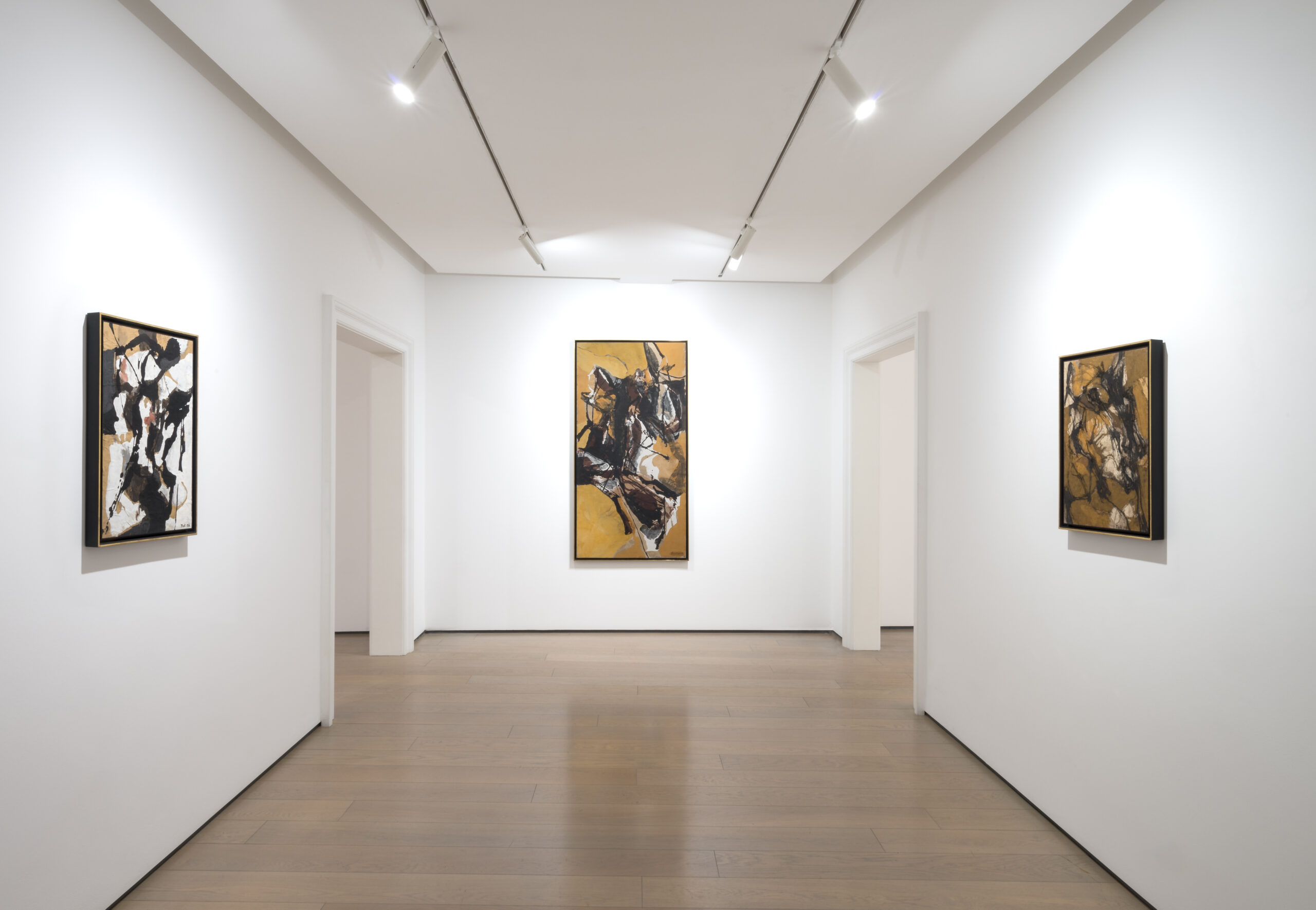
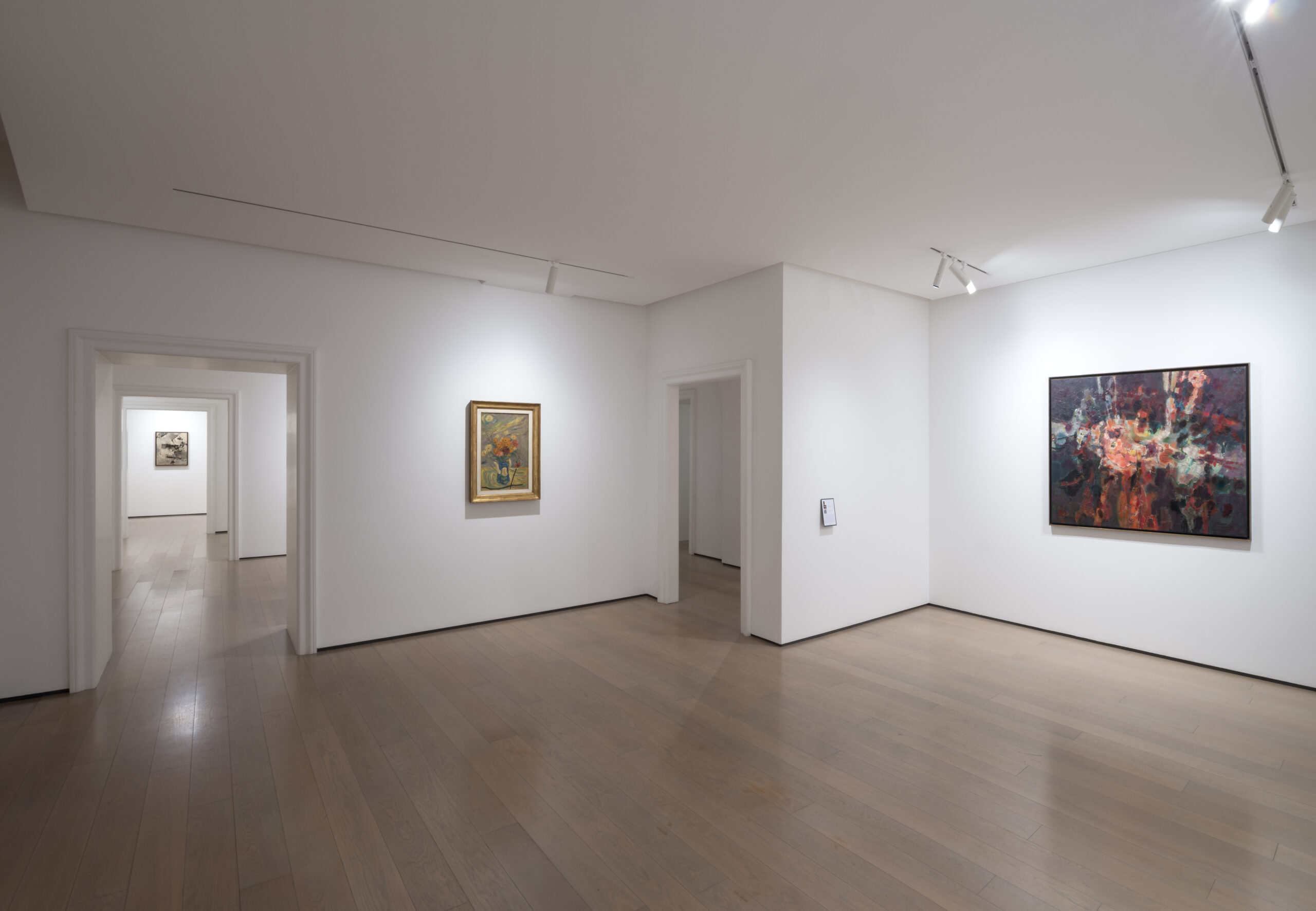
As from May 22, 2021, the exhibition Spazio aperto will be presented at Galleria dello Scudo. The title hints at a place of confrontation between different aspects of abstract art in Italy after World War II. Some of the exhibited works have been selected since they are considered a peculiar reinterpretation of the concept of “place” and “space”, demonstrating how the morphology of analysed contexts in their visual components can become an inexhaustible source of inspiration.
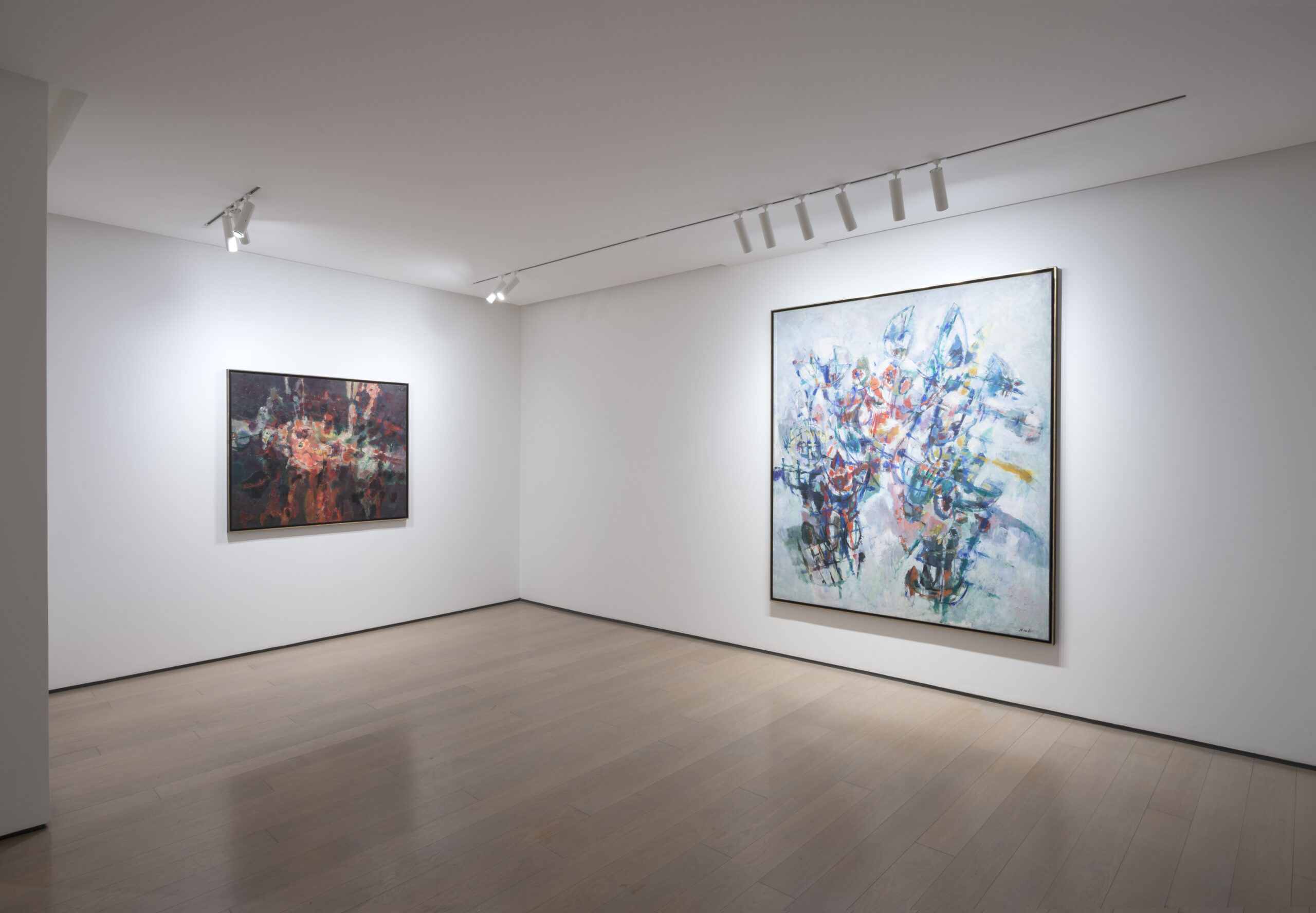
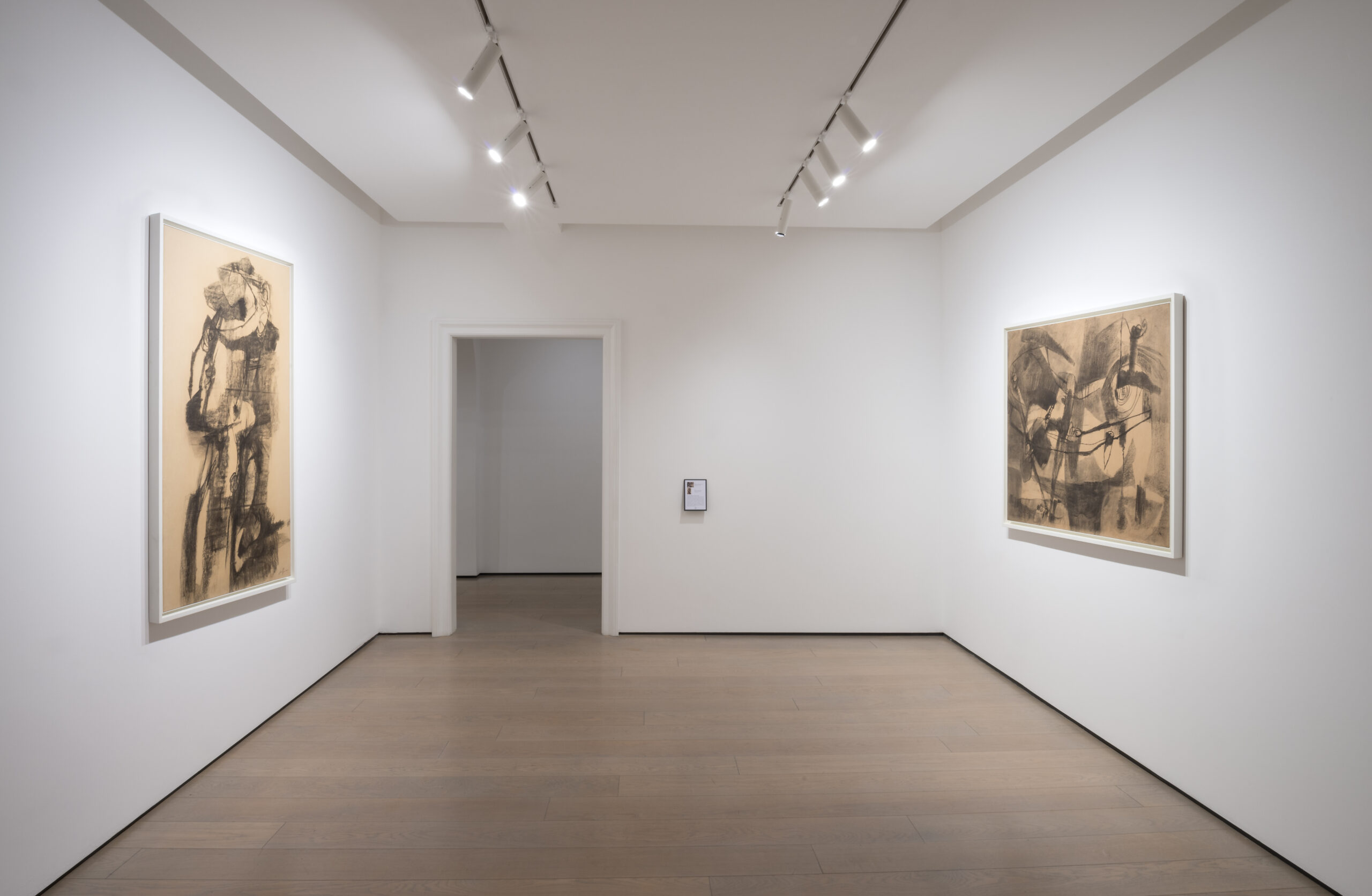
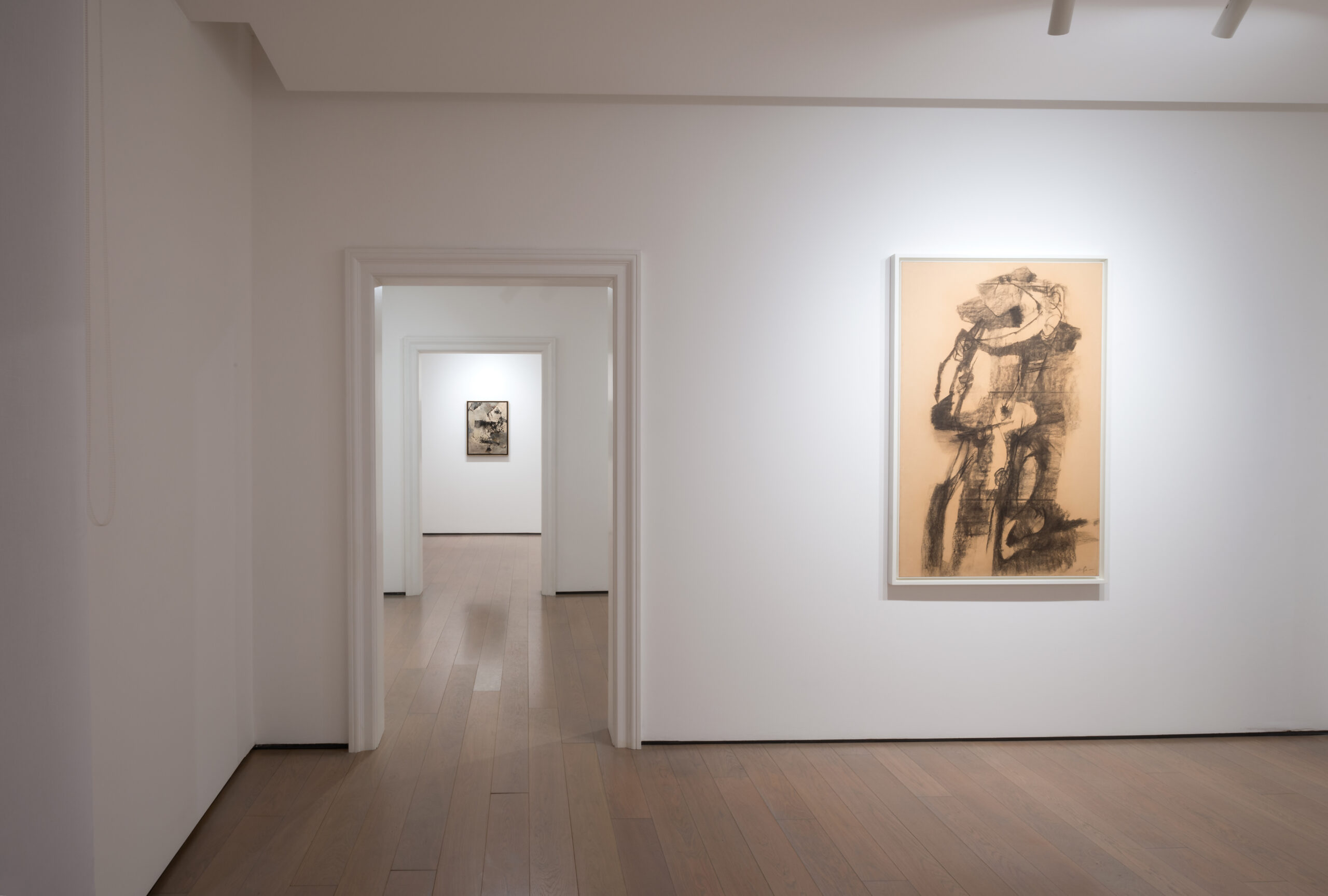
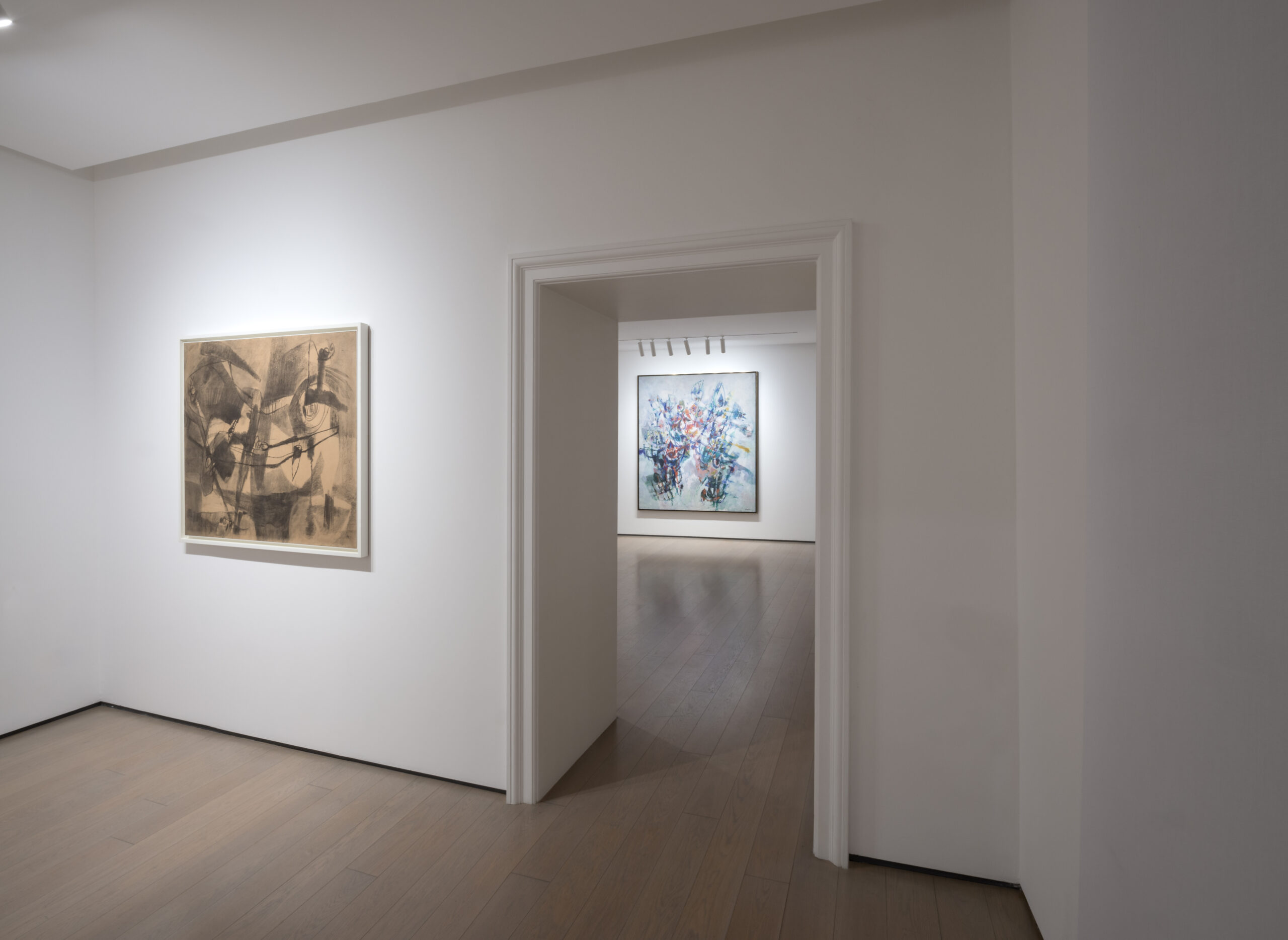
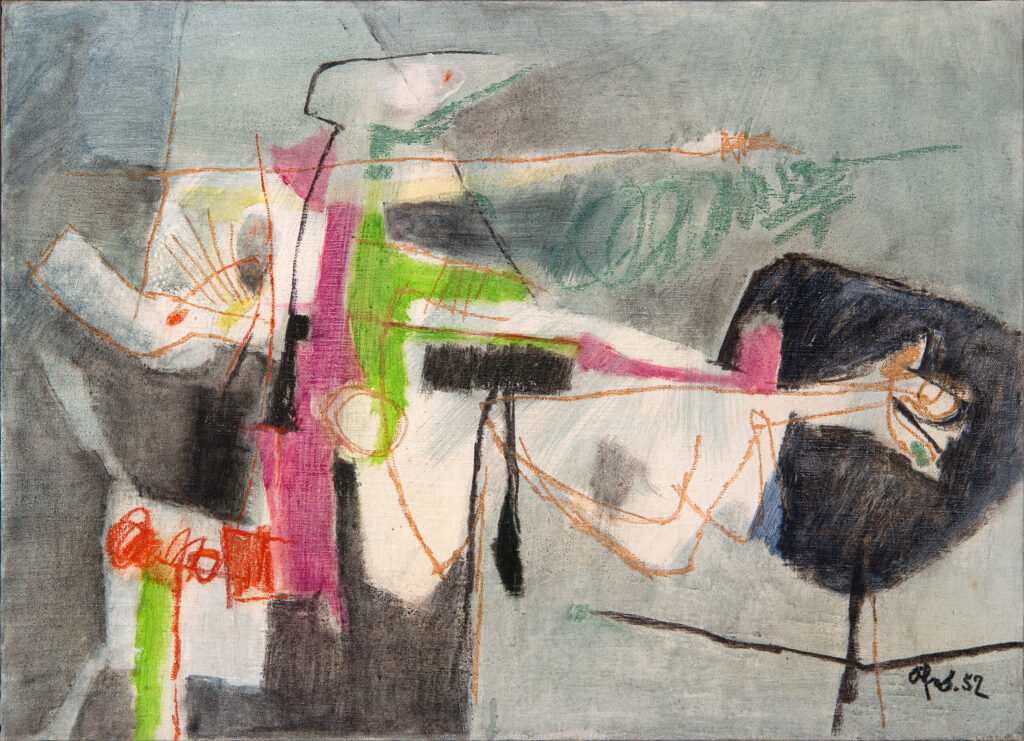
The exhibition is introduced by Afro and Renato Birolli, personalities at the centre of the debate between abstract art and realism, merged since the early 1950s into the experience of Gruppo degli Otto. The two artists, then joined by Giuseppe Santomaso, were among the most fervent supporters of the gradual bent of pictorial research towards a complete non-figurative nature, while maintaining precise object references in the titles. The initial cue, drawn from experience, appears to be reworked in such a radical way that it loses its original reference, making the urge to trace the initial cue superfluous, if not downright misleading. Two large drawings by Afro are exhibited here, both of which precede the execution of the canvases that faithfully reproduce the same compositional structure.
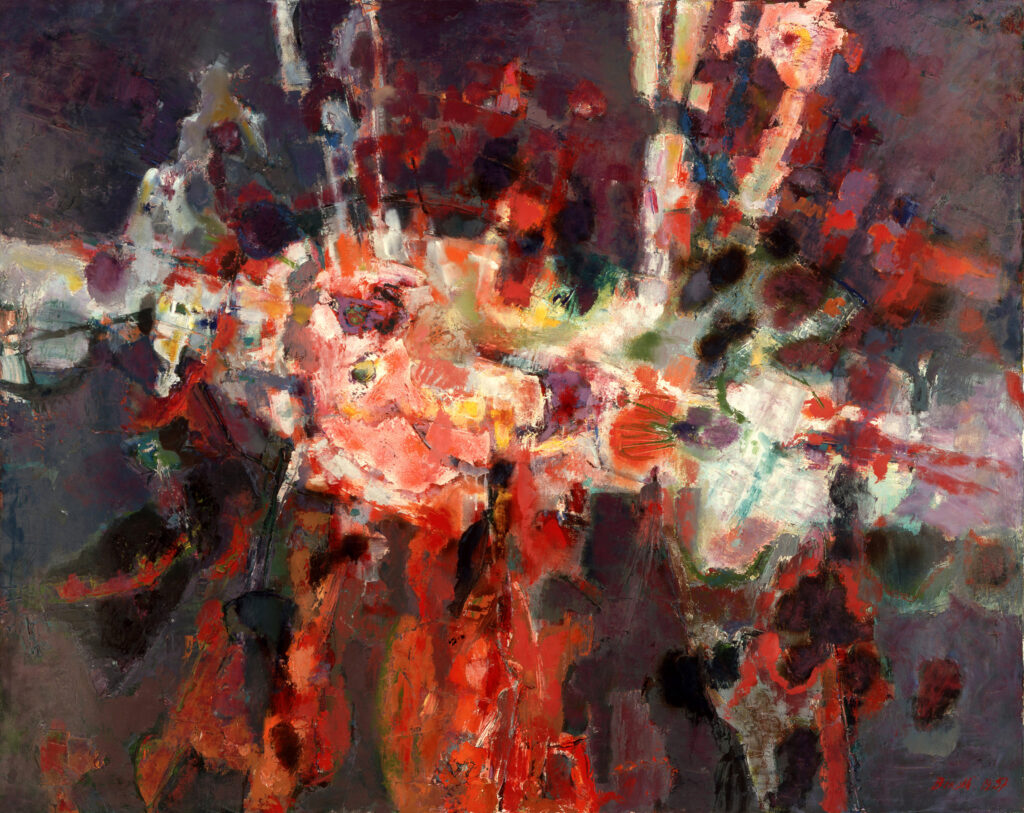
Anyhow, Birolli is the best interpreter of the idea of “space” as the origin of pictorial imagery. Since the early 1950s, his works have been increasingly inspired by visions of the Italian landscape, closely linked to the Ligurian places where he loved to take refuge, such as Manarola: the human figure disappears while nature becomes the real protagonist. “To ‘natural seeing’ I oppose ‘natural dreaming’. The weakening of large areas of contemporary art is due to the lack of the ability to ‘see’”, Birolli said in 1954.
Incendio nelle Cinque Terre (1957) can be considered among the most significant paintings belonging to the cycle dedicated to “Cinque Terre”, begun already in the summer of 1955, during a stay in Manarola. “For three days, great fires have been galloping on these scorched mountains, from Monte Rosso to Rio Maggiore. The night is full of cyclopean volcanoes and the day of immense mythical smokes…. The Cinque Terre teem with scary smokes. They impress me. I put aside all the work I started and began a large canvas on the fires in Cinque Terre. At last a great contrast of reds, greens; of blacks, browns and reds; of black-purples and reds or red, red and purple” (letter written by Birolli to Cavellini, August 23, 1955).
Between 1958 and 1959, the artist began to match suggestive musical titles to his works: “Not out of a strictly musical idea I painted the large canvases of Canti fiamminghi, in Antwerp and Milan, in the two winters of 1957 and 1958… To escape nature’s trap, it must be considered as a real term, indeed, as the ideal and disinterested, as well as necessary, environment within which every development of reality itself is determined: physical and moral, i.e. concrete. Only concrete reality generates vast and continuous conditions. But only moral reality concerns all the arts, even the most abstract, which is music.”
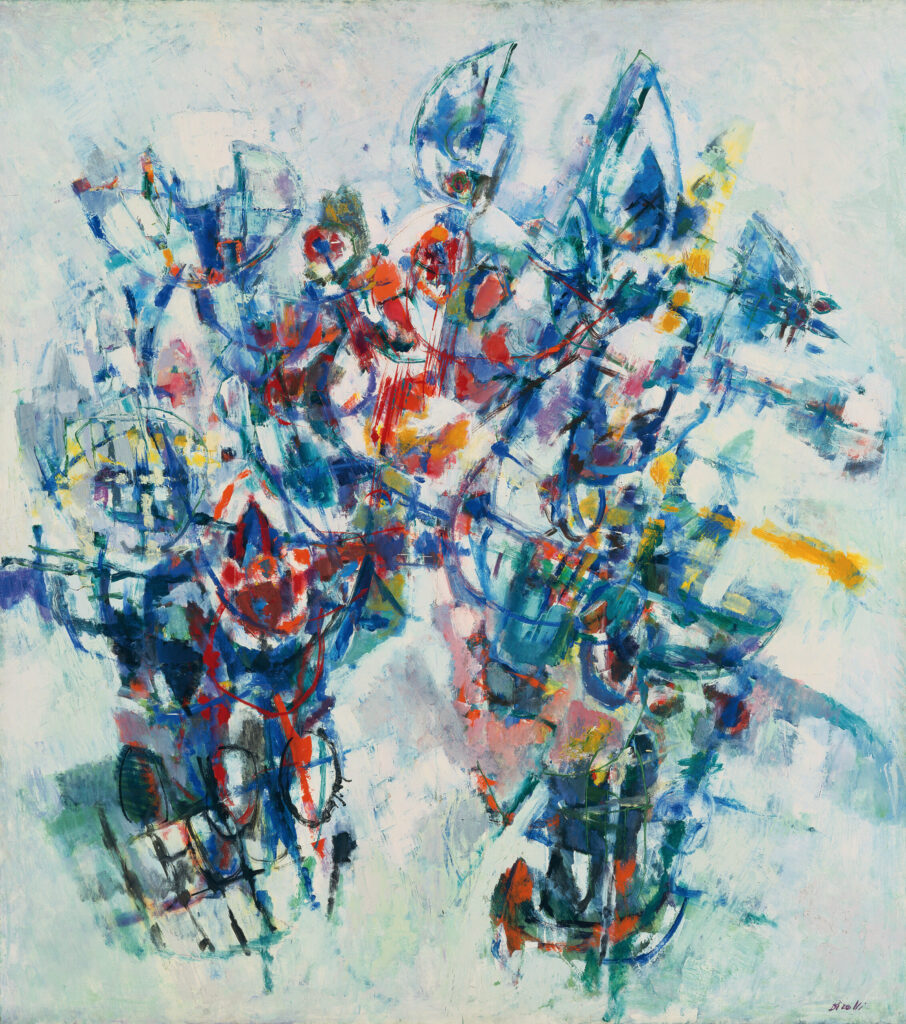
Ricerca del vero canto (1958), one of this season’s masterpieces, will enter the collection of Stanley J. Seeger Jr. from Princeton together with Incendio delle Cinque Terre (1957), after the solo exhibition at Catherine Viviano in New York. Later chosen for the room entirely dedicated to the artist at the XXX Venice Biennale in 1960, it will appear in the exhibition of the Seeger collection held at the Art Museum of Princeton University, in Princeton, the following year.
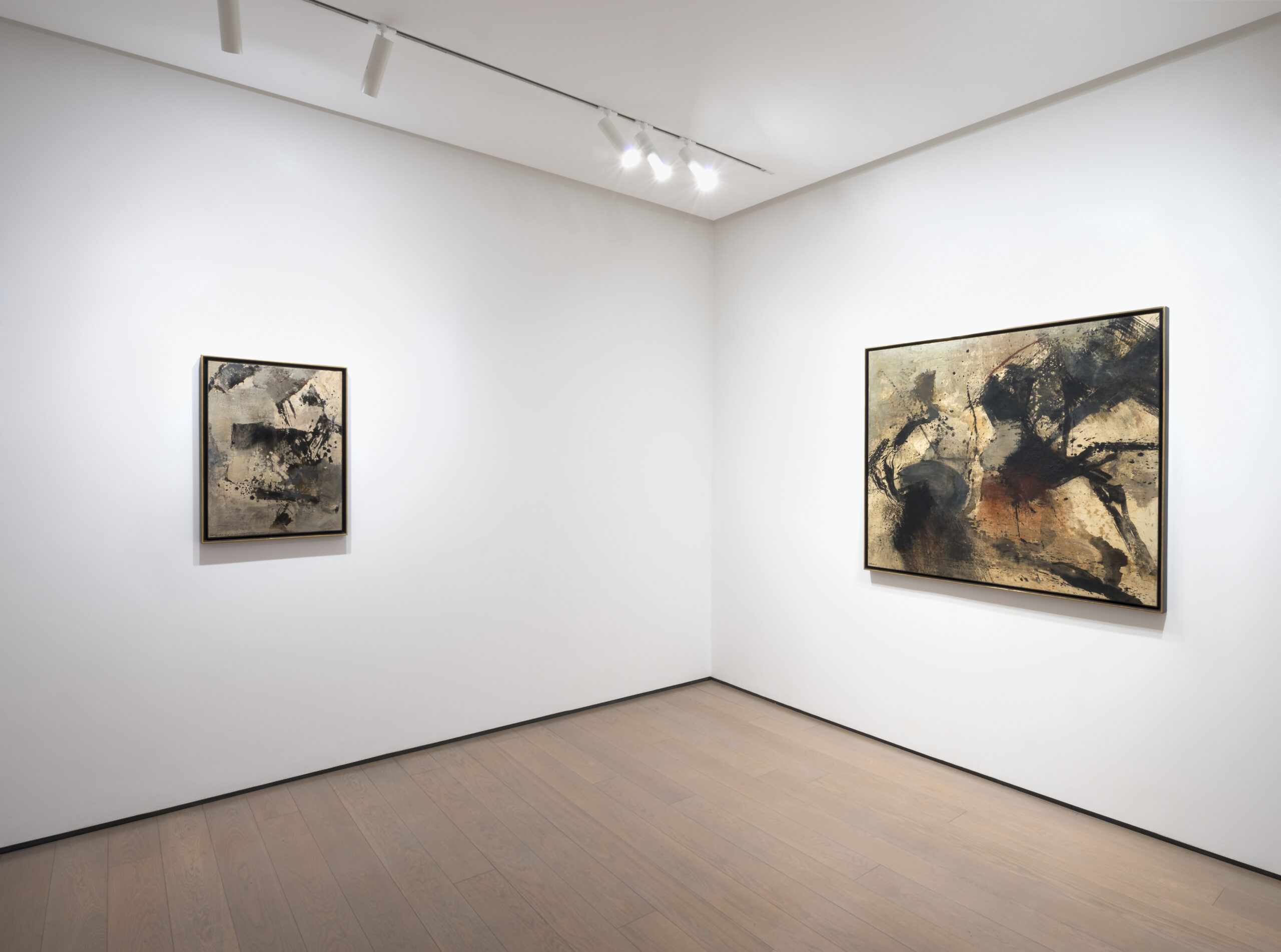
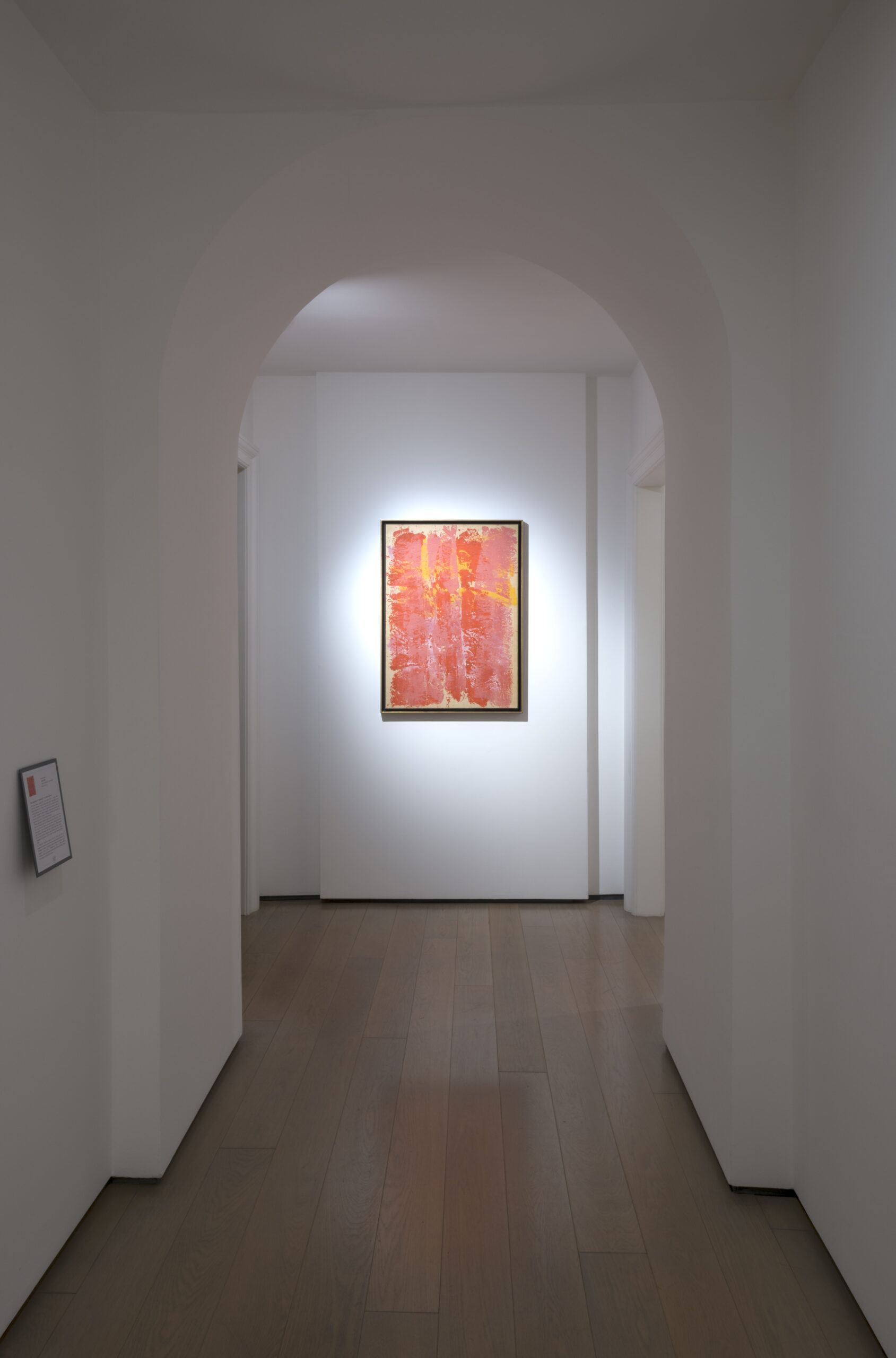
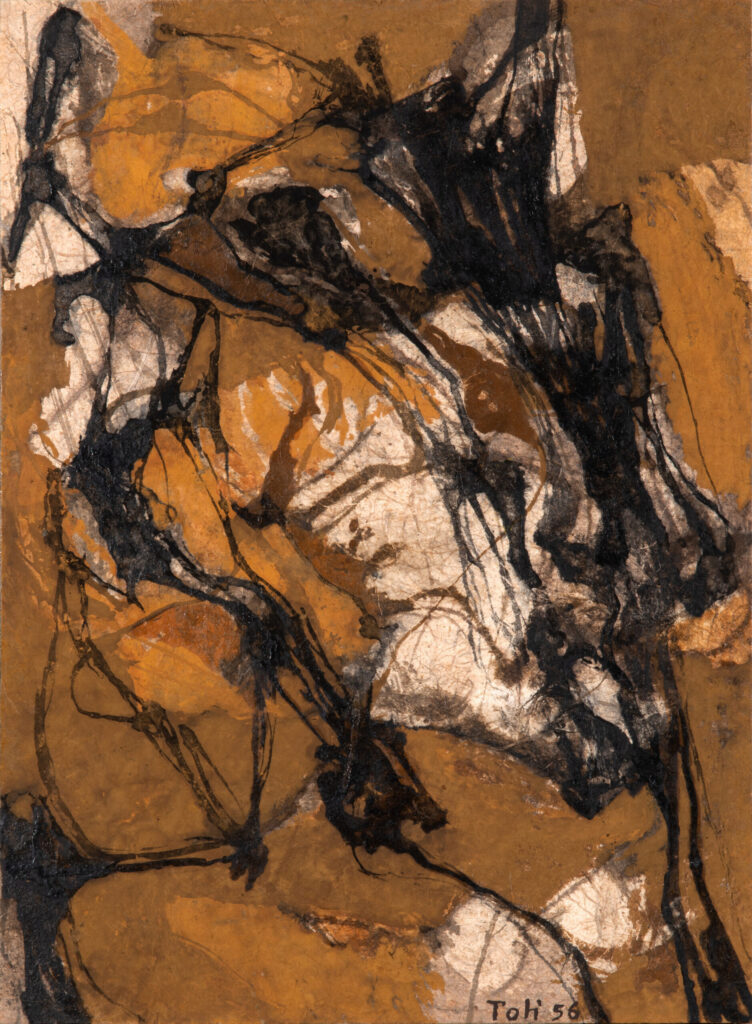
The relations between Afro, Birolli and Toti Scialoja are in this period of close collaboration, strengthened by the summer stays spent in Procida, the island then attracting American artists such as de Kooning, Rothko, and Twombly. In September 1957 Birolli spent a week there. In the late summer of 1957 Scialoja drew up his first Impronte, preceded by a series of large-scale paintings conceived on his return from his trip to New York. The canvas entitled Strappo belongs to this cycle of works, in which the use of transparencies predominates, letting the colour slowly emerging as if from the depth of the surface.
In the large horizontal format, the tangencies and distances of Abstract Expressionism canons can be read. Scialoja still shuns the all-over which will prefigure itself in the later experiences, maintaining a dialectic between full and empty within the field of the page. In the drastic reduction of the chromatic register, the artist foreshadows the radical choices of 1960-61, making the tonal chords inherited from Morandi’s lesson coexist with acute sensitivity. “I try to reconstruct lumps, perhaps, not ‘forms’: densities, confluences, ganglia, shadow seals, in the shadows, centres of light, the anxiety of a living articulation for something that will never be defined. Encounters with myself: knots, collisions perhaps, held together by a persistence that is love, a source that always starts to flow again, the repetition of the same note”, so Scialoja writes in his Giornale di pittura.
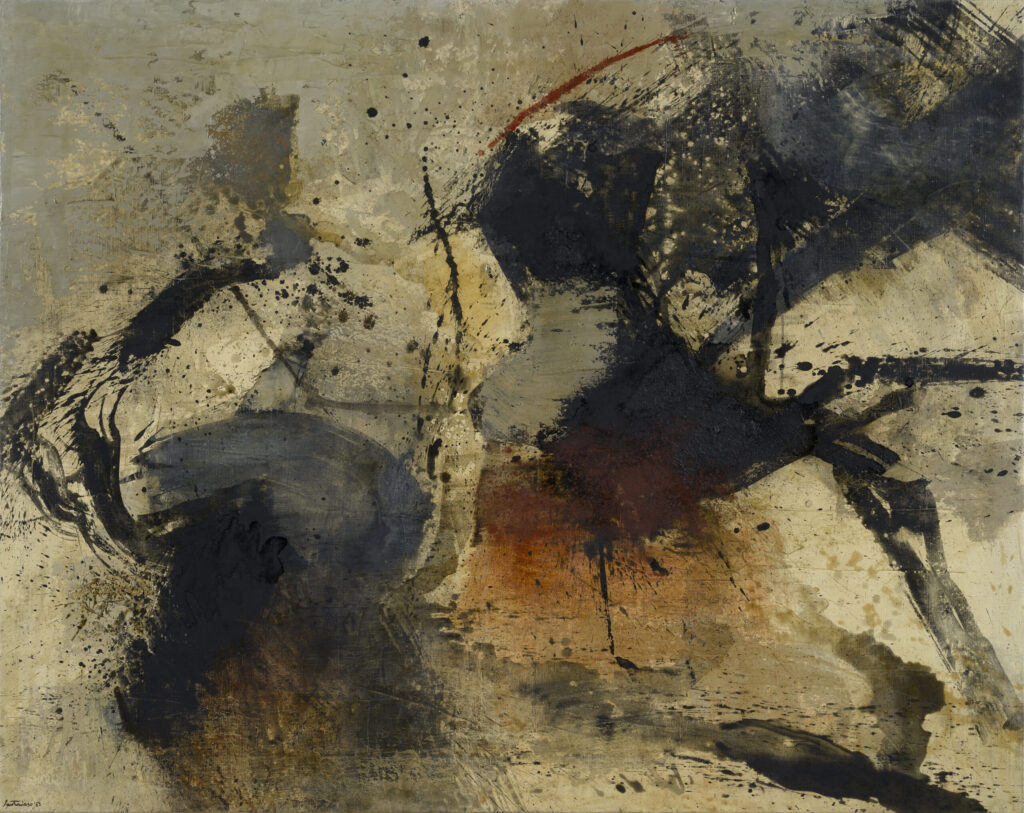
The centrality of the gesture that becomes violent in Scialoja, hinging on chromaticism clearly departing from the skilful tonal agreement governing the composition, re-emerges also in the work by Giuseppe Santomaso, another protagonist of the Italian scene.
The evolution of lyrical abstraction towards a personal idea of “Abstract Expressionism” is perceivable in his research already at the end of the 1950s, and more fully in the early 1960s, when the typical body drafts, for example of the cycle of “Cantieri”, being the result of stratifications, are followed by other interventions with splashes of colour and drippings. The two trips to Puglia in 1960 with Werner Haftmann gave him suggestions then merged into paintings such as Verso Matera or Paese, offering the spur to draft ideal “travel diaries”, born of strong emotional tensions. “From the images of memory and from those formal crystallizations, a flow full of images is born in the painter […], a dialogue full of tension, from one moment to the next” (W. Haftmann, 1964).
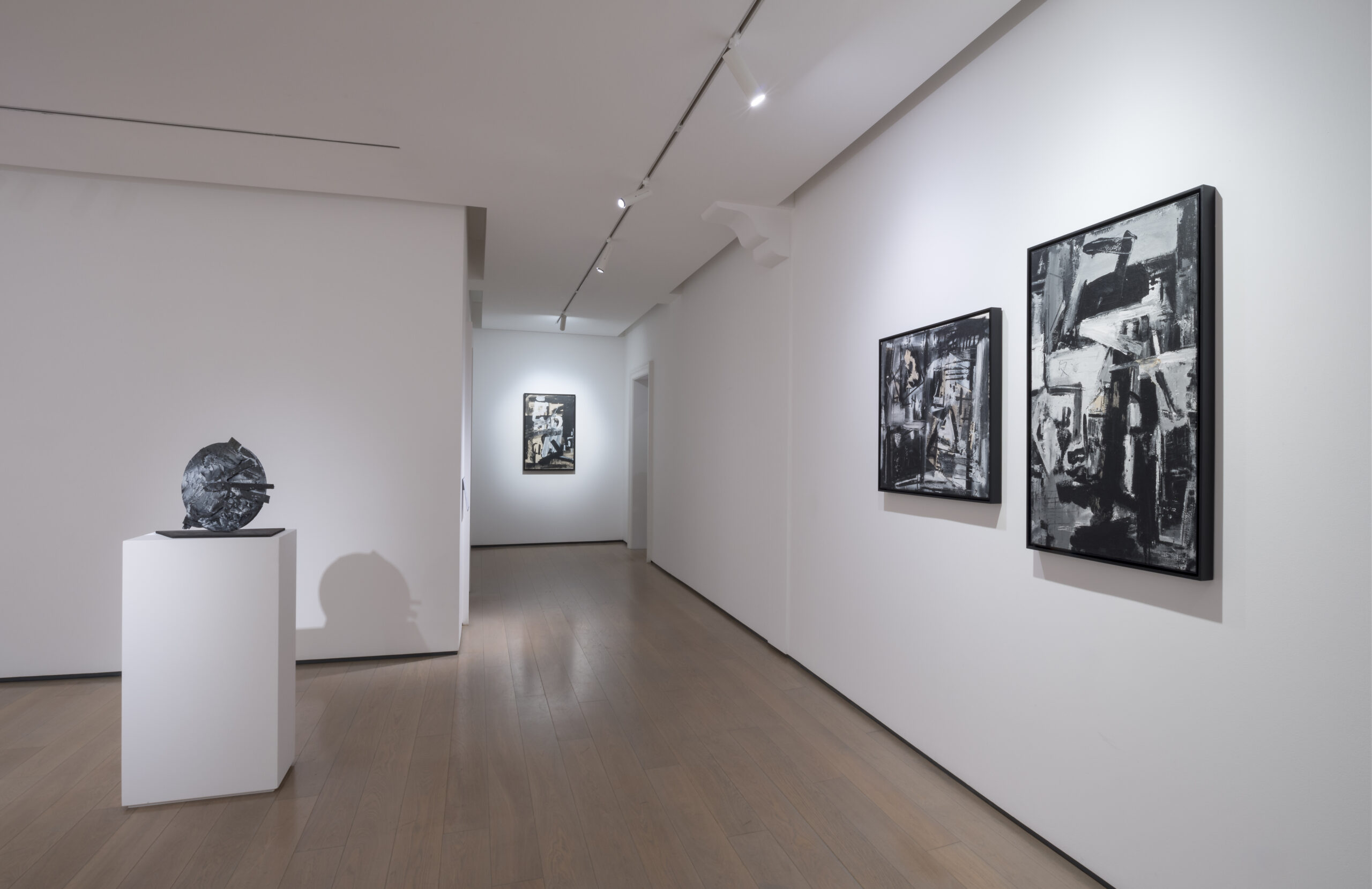
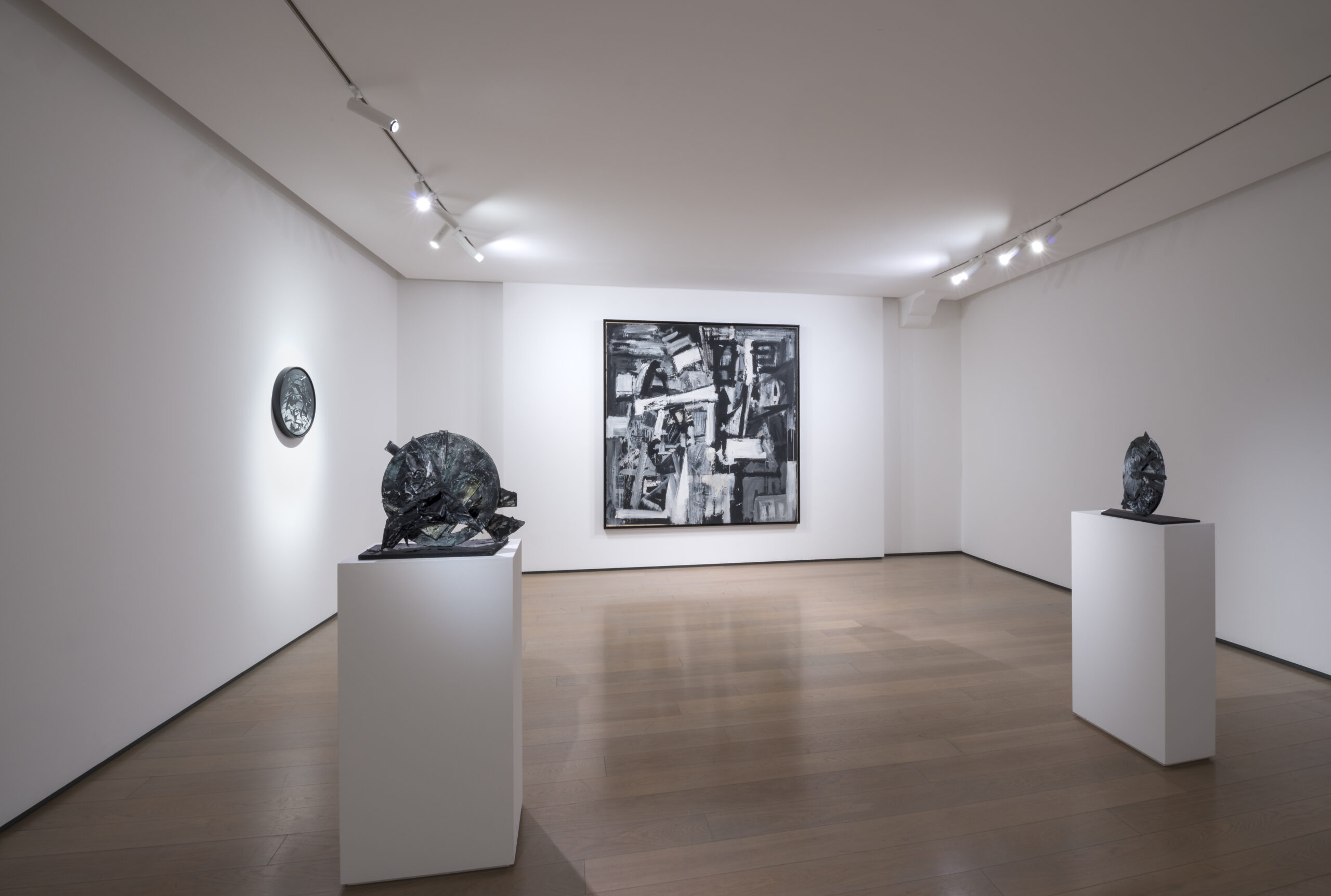
If the memory of a real or imaginary place runs through Santomaso’s work by relating the “soul” of the forms with the “soul” of the colours, in Emilio Vedova it gets highly specific values. After the series inspired by places he himself visited, such as Dal diario del Brasile or the cycles Per la Spagna, these latter conceived with very specific purposes of political denunciation, in the 1970s it was America that animated the artist’s expressive repertoire, the country that after World War II collected the legacy left by Europe as the epicentre of contemporary art, but also the place of contradictions and social disparities, which the artist feels the duty to denounce, so as to prove that he is not an inert witness to abuses he considers unacceptable.
De America, therefore, is the title of a series of large-format paintings from 1976, which will be joined the following year by smaller canvases, offering the viewer a completely personal reading of the overseas world, full of tensions and of contrasts seen, not surprisingly, through a black and white palette.
↢ Reduce text
He was born in Udine in 1912. In 1950 he stayed in New York and began his collaboration with the dealer Catherine Viviano. Present at the exhibitions of the Carnegie Institute in Pittsburgh and at the first edition of Documenta, in 1956 he won the prize for best Italian artist at the Venice Biennale. His mural Il giardino della speranza (The Garden of Hope) for the Unesco headquarters in Paris dates from 1958.
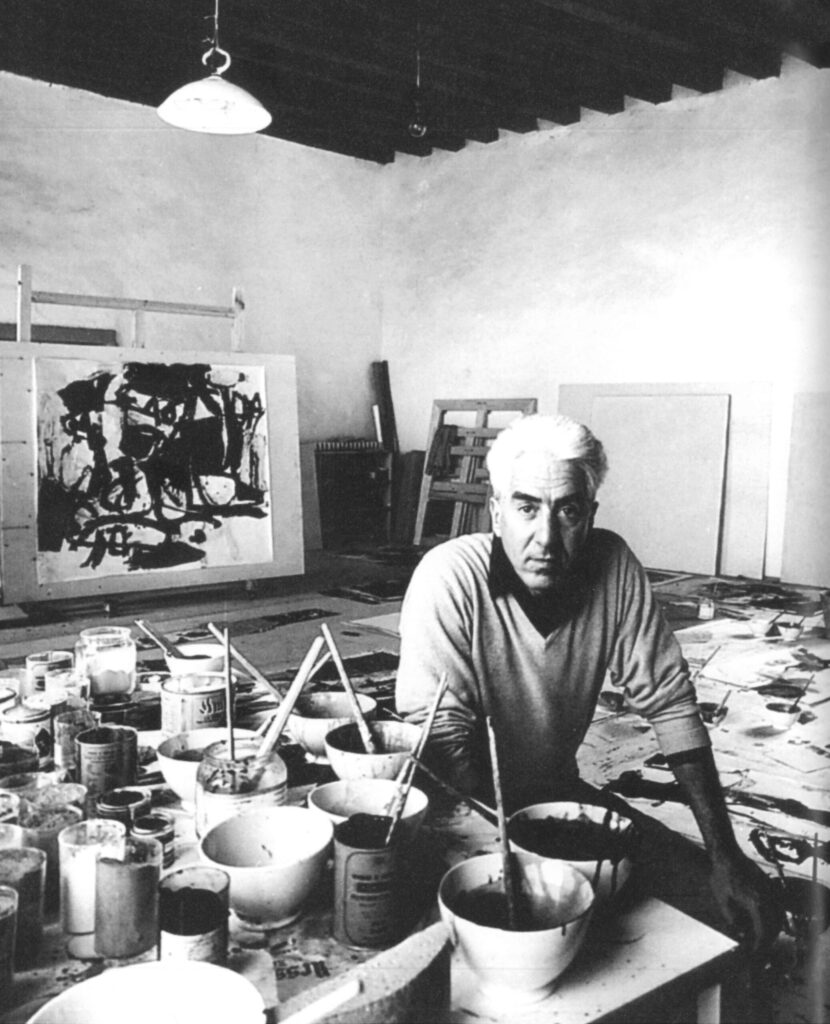
He was born in Verona in 1905. In 1927 he moved to Milan where he met Carlo Carrà and Edoardo Persico, director of the Galleria del Milione; here he exhibited from 1932, the year in which he participated in the exhibition of the 10 painters at the Galleria d’Arte in Rome, approaching the group of the Roman School. From 1938, in Milan, he became the animator of the Corrente Group and of the homonymous magazine.
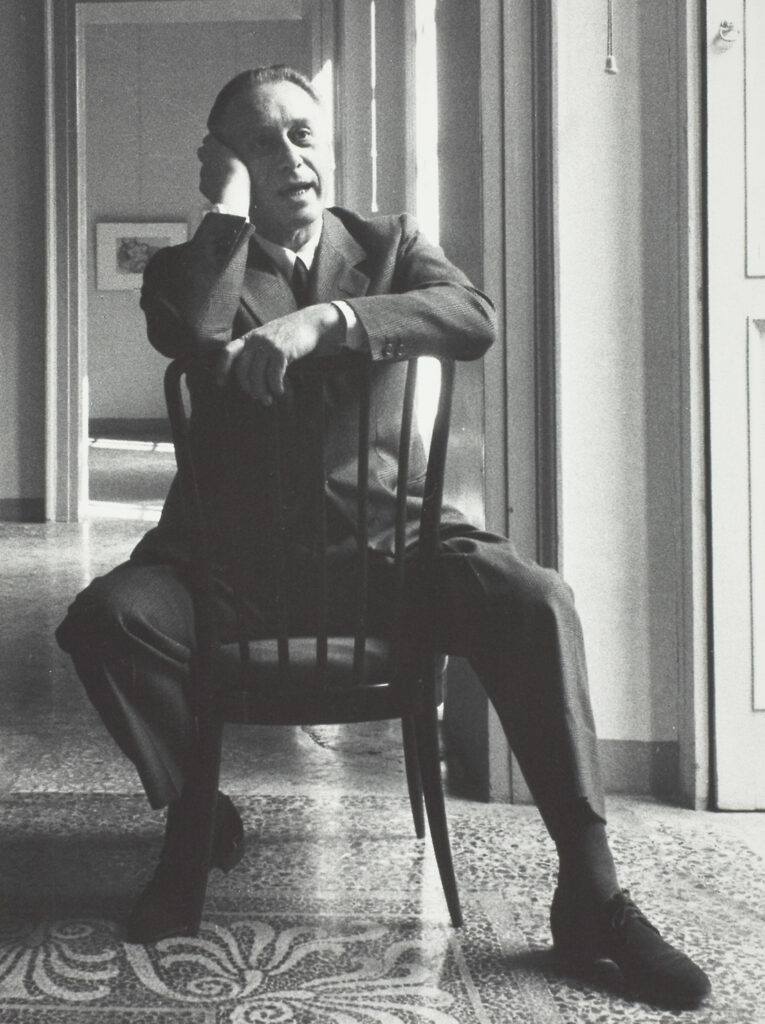
Born in Venice in 1907, he devoted himself to painting from an early age; already in 1926 Giuseppe Santomaso took part in a group show at the Bevilacqua La Masa. He made his debut at the Biennale in 1934 which was followed by a change and abandonment of the post-impressionist language after his trips to Holland and Paris in 1937. In 1939 in Paris he held his first solo exhibition at the Galerie Rive Gauche.
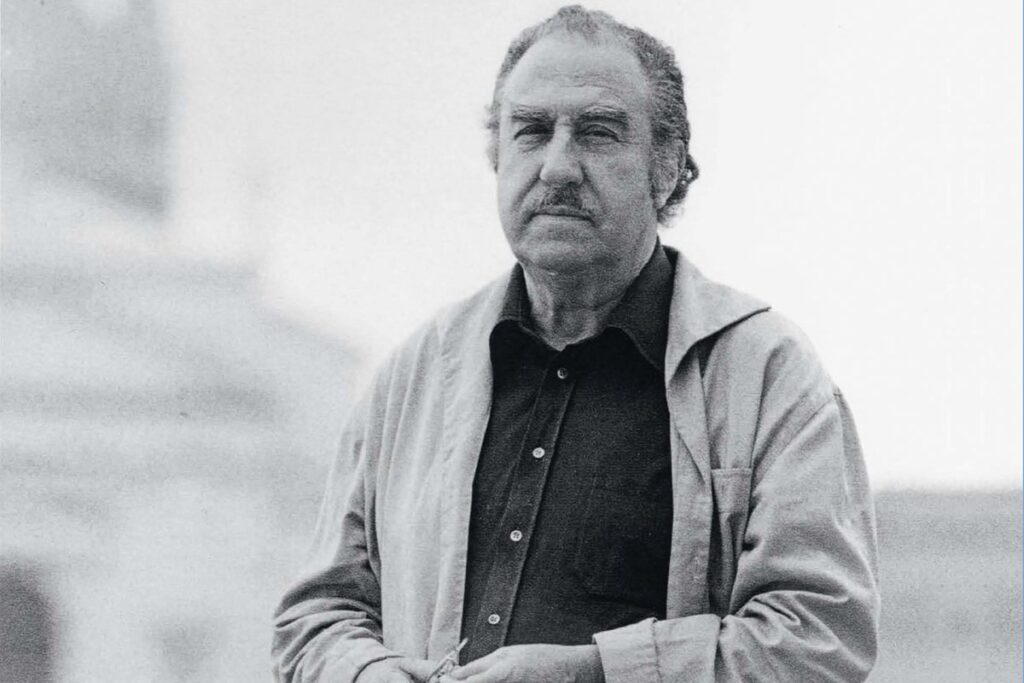
Born in Rome in 1914, he followed his intimate vocation for painting and poetry from a very young age, frequenting the context of the Galleria della Cometa led by Corrado Cagli and Libero de Libero. In 1939 he took part in the III Quadriennale in Rome, and the following year he held his first solo exhibition at the Galleria Genova in the Ligurian capital.
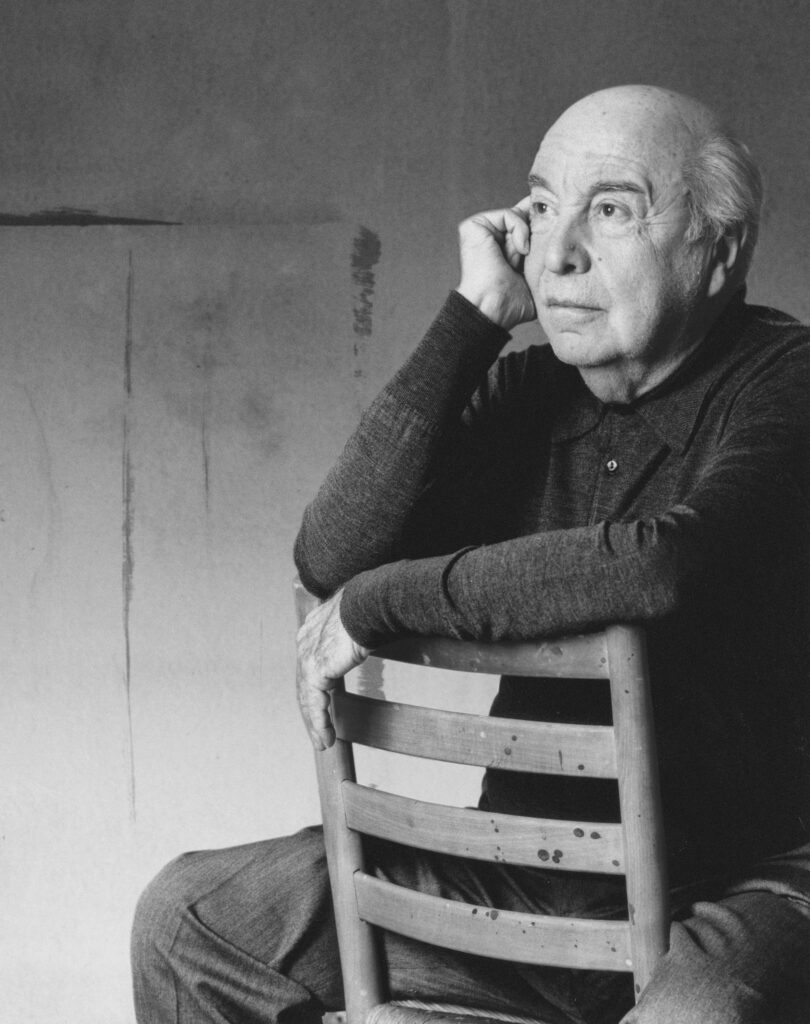
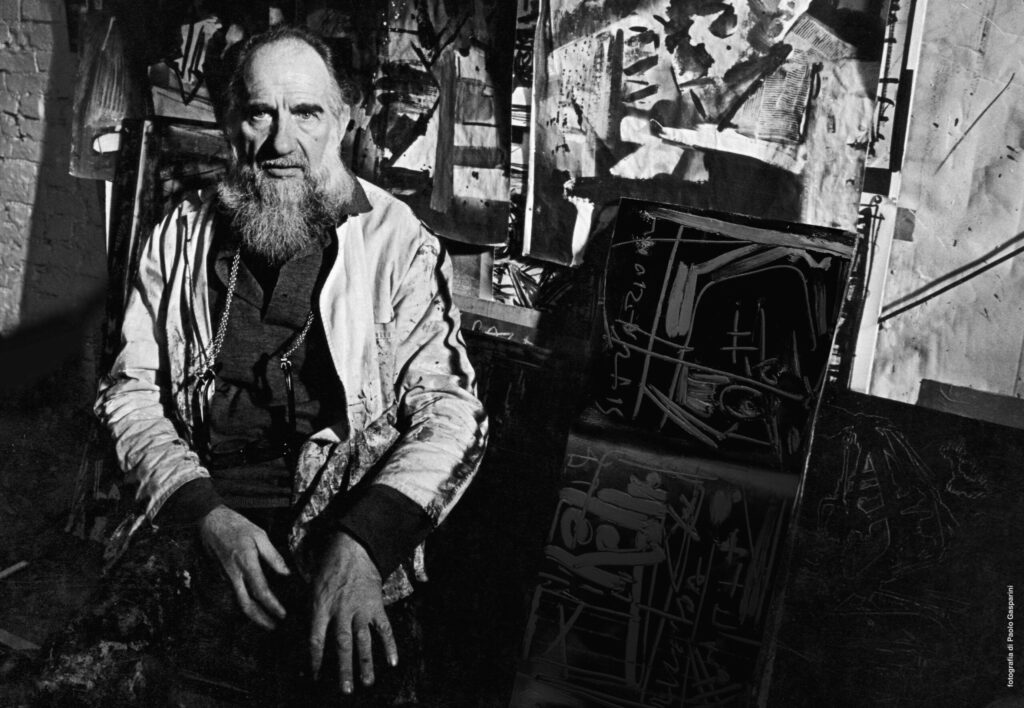
After joining the Fronte Nuovo delle Arti, Vedova is among the most important exponents of the abstract current of Italian painting, based on the use of gestural painting of great expressive power. Author in 1964 of the Absurdes Berliner Tagebuch, a series of Plurimi exhibited at Documenta Kassel, he links his name to some important pictorial cycles, including De America (1976-1977), Tondi and Oltre (1985-1986) which are flanked by large canvases from the 80s.